Talk with us: +91 97277 00530
kandisa2009@yahoo.in

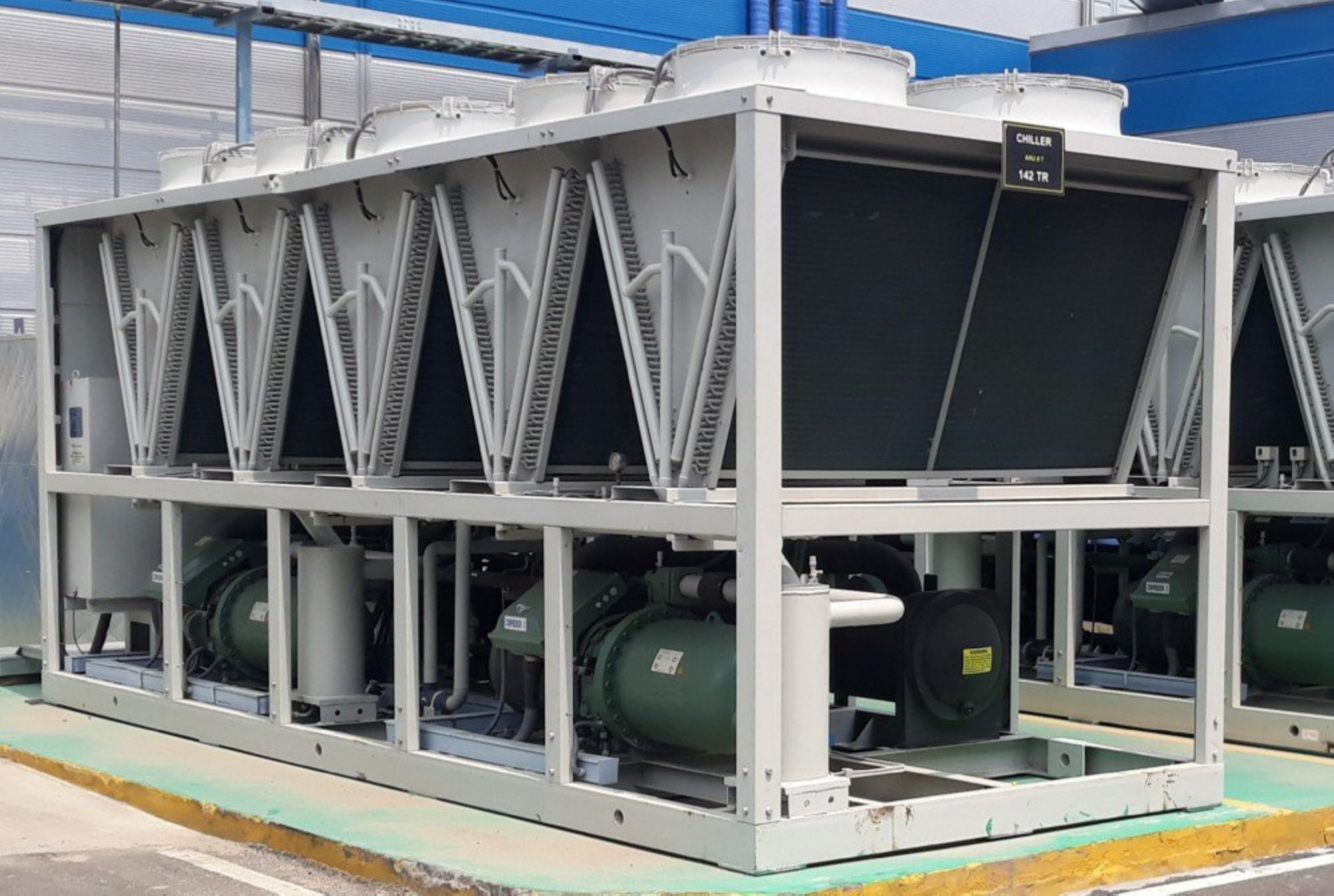
The company was appointed by leading OEMs in electrical chiller manufacturing field as its channel partner in Gujarat. Also the company became channel partner for reputed companies in the field of management of large utility contracts. Hence the company is authorized Channel partner for THERMAX, VOLTAS, BLUE STAR, KIRLOSKAR COOLING, YORK INTERNATIONAL AND DAIKIN. Hence the company is able to obtain captive business once the above OEMs sells the Chiller, as it is handed to the company for service and spares for life. The company has currently 150 installations across Gujarat giving Preventive Maintenance Service and Annual Maintenance Service.
Chillers are the single largest energy-using component in most institutional and commercial facilities. In most of the cases, more than 50 percent of the annual electricity use can be attributed to the chillers. So proper operation and maintenance of the chillers should be a high priority in any facility energy management program.
It is surprising, however, to see just how often chillers are operated or maintained inefficiently or ineffectively, resulting in higher energy costs, lower system performance and reliability, and decreased equipment life.
While many factors contribute to decreased chiller efficiency, the five most common ones include: poor operating practices, ignored or deferred maintenance, ignored cooling tower maintenance, over-sizing, and ignoring alternate-fuel chillers. While each of these factors poses a real and significant threat to chiller efficiency, all can be easily controlled or eliminated by efficient maintenance of the system.
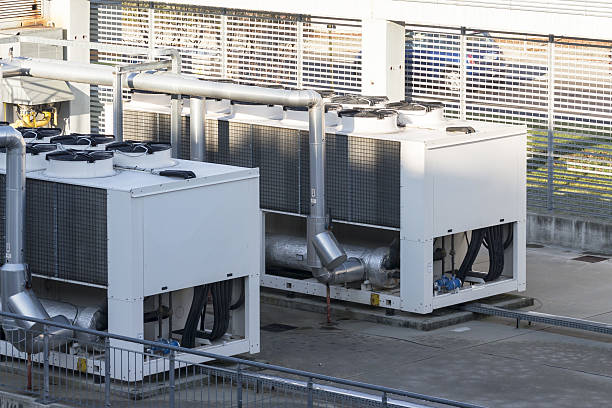
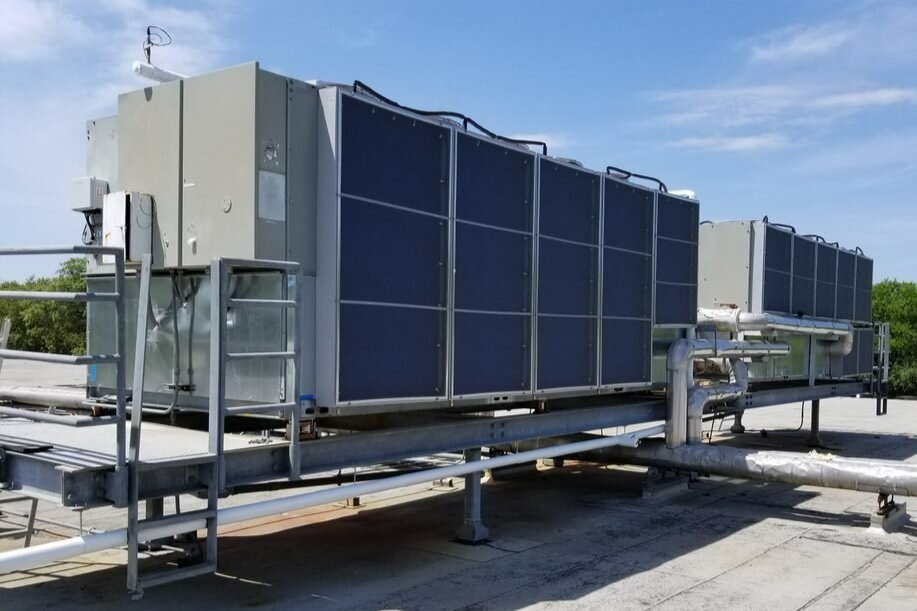
Poor operating practices not only can decrease chiller efficiency, but also chiller life. Most such practices are the result of one of two situations: trying to get a chiller to do something that it was not designed to do or not understanding the consequences of a particular action.
For example, one common practice when trying to provide more cooling water to a facility is to increase the rate of chilled water flow through the chiller. The belief is that with a higher flow rate, more cooling water will be available.
In reality, however, increasing the flow rate through a chiller beyond the manufacturer’s recommendation actually reduces the operating efficiency of the chiller. Equally important, flow rates higher than those recommended increase the rate of erosion in the chiller’s tubes, leading to early tube failure.
The problem with poor operating practices is that their impact on chiller operation generally goes unnoticed. Chillers continue to operate, meeting various loads under a range of conditions. Soon, however, poor operating practices become accepted as standard operating procedure, and one day, a problem in the chiller’s operation might become obvious, or the chiller might not be able to satisfy a cooling load that previously had never been a problem. When that occurs, technicians often blame the weather or the chiller itself; not the way the chiller is being operated and maintained.
Making certain that poor operating practices do not become standard operating procedure requires trained personnel in both maintenance and operating the system.